

How to Start a Saving Plan
Learning how to start a saving plan is a key money decision. It matters at any age and income level. Many people postpone saving because they think they need a large income first, or because the process feels overwhelming.
The truth is, anyone can begin saving today with the right approach and a clear plan. In this guide, we’ll walk you through practical and easy steps.
These steps will help you start a saving plan that fits your lifestyle and income.
They will also support your future financial goals.
Why You Need a Saving Plan
Before diving into the how, it’s worth understanding . A saving plan gives your money direction. Without one, income tends to disappear into daily expenses, impulse purchases, and unplanned spending.
With a plan, every dollar has a purpose. It can build an emergency fund, save for a home, plan a vacation, or prepare you for retirement.
A saving plan also reduces financial stress. Knowing you have money set aside for emergencies or future goals brings peace of mind that’s hard to put a price on. It shifts your mindset from reactive spending to proactive financial control.
Step 1: Set Clear and Specific Goals
The first step in building any saving plan is identifying what you’re saving for. Vague goals like “I want to save more money” rarely work because they lack direction. Instead, get specific:
*Do you want to save $5,000 for an emergency fund?
*Are you saving for a down payment on a house?
*Is retirement 20 years away, and you want to start early?
Write your goals along with a target amount and a realistic timeline. This turns an abstract wish into an actionable plan.
Step 2: Understand Your Income and Expenses
You can’t save effectively without knowing where your money currently goes. Track your income and expenses for at least one month. Separate your spending into categories: essentials (rent, utilities, groceries) and non-essentials (dining out, subscriptions, entertainment).
This exercise often reveals surprising spending leaks. These include forgotten subscriptions, frequent small purchases that add, and dining costs you can trim. Once you see the full picture, you’ll know exactly how much you can practically set aside each month.
Step 3: Choose a Savings Percentage or Amount
A popular guideline is the 50/30/20 rule- 50% of income for needs, 30% for wants, and 20% for savings and debt repayment. However, this isn’t a one-size-fits-all formula. If 20% feels unrealistic right now, start smaller. Even saving 5-10% consistently is far better than not saving at all.
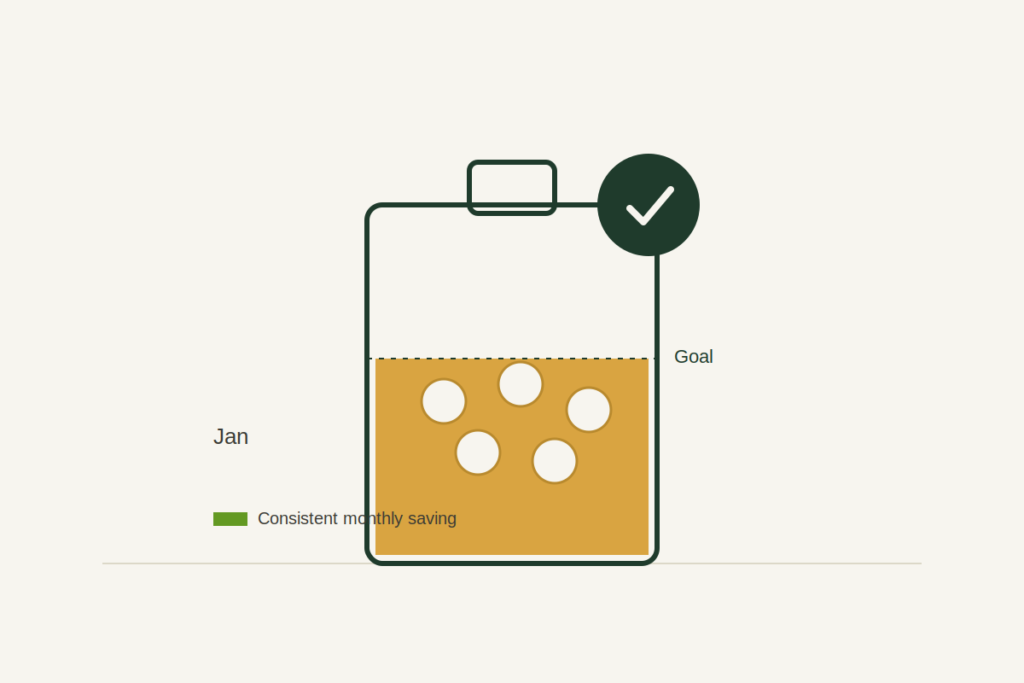
The key is consistency, not perfection. Saving a small amount each month works better than setting a big goal and quitting after a few weeks.
Step 4: Automate Your Savings
One of the most effective ways to stick to a saving plan is to remove willpower from the equation. Set up an automatic transfer from your checking account to your savings account right after payday. When saving happens automatically, you’re far less likely to spend that money before you get the chance to save it.
Many banks let you schedule these transfers easily. Some even offer “round-up” savings tools that save small amounts from daily purchases.
Step 5: Build an Emergency Fund First
Before you focus on long-term goals like investing, build an emergency fund first
Aim to cover 3 to 6 months of essential expenses. This fund acts as a financial buffer, so unexpected costs like medical bills or car repairs won’t derail your progress. It also helps you avoid debt.
Keep this money in a separate, easily accessible savings account rather than mixing it with your everyday spending funds.
Step 6: Choose the Right Savings Account
Not all savings accounts are equal. Look for a high-yield savings account that offers a better interest rate than a standard checking or savings account. Over time, even a small interest rate difference can add, helping your money grow passively while it sits safely aside.
Compare a few banks or online financial institutions. Check account fees, minimum balance requirements, and access before you choose.
Step 7: Cut Unnecessary Expenses
Once you’ve identified spending leaks from Step 2, look for practical ways to reduce them. This doesn’t mean removing all enjoyment from your life -it means being intentional. Cancel unused subscriptions, cook at home more often, or find lower-cost alternatives for services you use regularly.
Redirect the money you save from these cuts directly into your savings plan. Small adjustments, over time, create meaningful progress.
Step 8: Track Your Progress Regularly
A saving plan isn’t something you set once and forget. Review your budget and savings progress monthly. Are you on track to meet your goals? Do you need to adjust your savings percentage because of a change in income or expenses?
Regular check-ins keep you accountable. They also help you celebrate small wins, which keeps you motivated.
Step 9: Increase Your Savings Rate Over Time
As your income grows or your expenses decrease, increase the percentage you save. Even a 1-2% increase each year can make a significant difference over time. This happens because of compounding, especially if you invest some savings for long-term goals.
Common Mistakes to Avoid
Waiting for the “right time“: There’s rarely a perfect moment to start saving. Begin with whatever amount you can, even if it’s small.
Setting unrealistic goals: Overly ambitious targets often lead to giving up. Start conservative and adjust as you build the habit.
Not having a separate account: Mixing savings with everyday spending makes it too easy to use your savings.
Savings goal calculator
Find out how much to save each month to hit your goal.
This is a simple estimate and does not include interest earned on your savings.
Final Thoughts
Starting a saving plan does not need complex money knowledge or a high income. It needs clear goals, steady effort, and good habits. By setting clear goals, you build a strong base.
Track your income and expenses.
Automate your savings.
Start an emergency fund. This base supports every future goal you have.
The most important step is simply beginning. Once you learn how to start a saving plan and follow these steps, saving feels easier. It becomes a habit that grows over time. It helps you build financial security and freedom.
There’s no fixed amount that works for everyone – it depends on your income and expenses. A good starting point is saving 10-20% of your monthly income, but even 5% is a solid beginning if that’s all you can manage right now. The goal is consistency, not a specific number. Start small, automate it, and increase the amount as your income grows or your expenses decrease.
If your income is limited, focus first on tracking your expenses to find small leaks – unused subscriptions, frequent takeout, or impulse purchases. Even saving $20-$50 a month consistently builds the habit and adds up over time. Automating a small, fixed transfer right after payday ensures you save before you have the chance to spend it, regardless of how small the amount is.